
Is It Better to Lease or Buy Gym Equipment?
Setting up a home gym or commercial fitness centre in Singapore requires careful planning, especially when choosing between leasing and buying gym equipment. Both options offer advantages depending on your budget, workout needs, and long-term goals.
Whether you’re a gym owner, fitness studio operator, or home fitness enthusiast, understanding the differences can help you make a smarter investment.
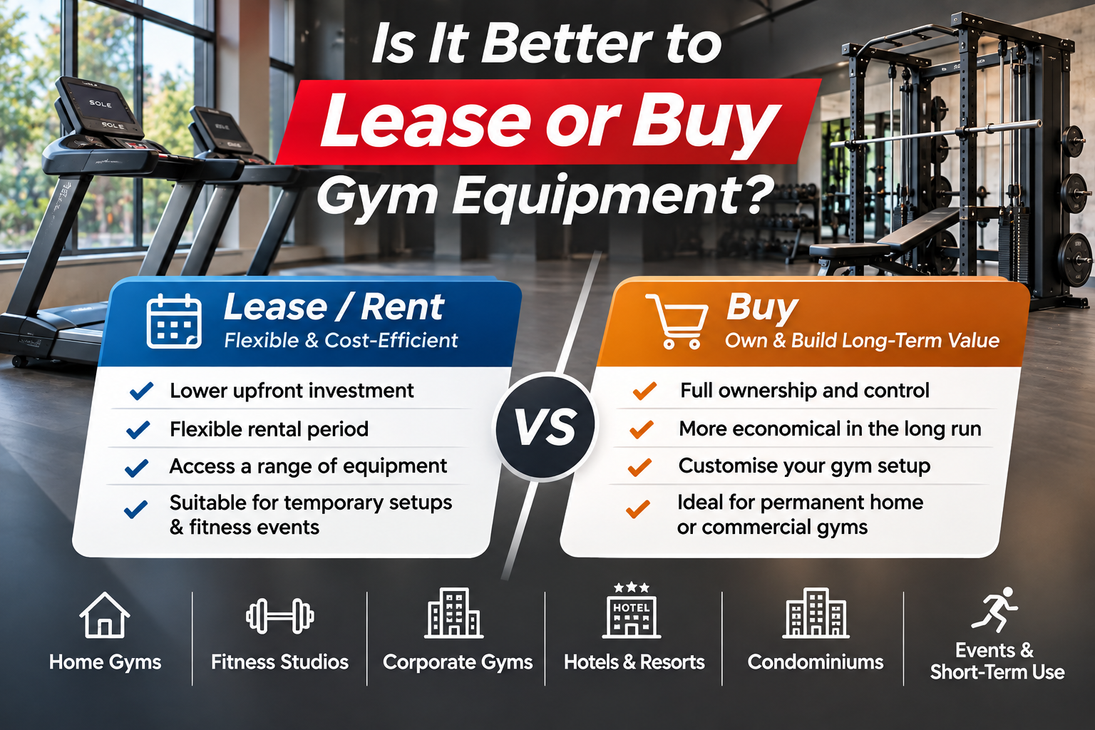
Gym Equipment Leasing vs Buying: What’s the Difference?
Gym equipment leasing in Singapore allows businesses or individuals to use fitness equipment through periodic payments under an agreed contract. Rental arrangements may offer shorter-term flexibility, depending on the provider.
Buying gym equipment means purchasing the machines outright, giving you ownership and control over their use.
| Features | Leasing / Rental | Buying |
|---|---|---|
| Upfront Investment | Generally lower | Higher |
| Ownership | Usually provider-owned | Customer-owned |
| Flexibility | Depends on contract | Long-term control |
| Maintenance | Depends on agreement | Owner’s responsibility |
| Long-Term Cost | Ongoing payments | One-time purchase plus upkeep |
Benefits of Leasing Gym Equipment in Singapore
Gym equipment rental in Singapore can be a practical solution for businesses that need fitness equipment without making a large initial investment.
Key advantages include:
- Lower Upfront Expenses: Reduce the initial financial commitment.
- Flexible Usage: Suitable for temporary gyms, corporate events, and fitness programmes.
- Equipment Variety: Access different fitness machines based on availability.
- Budget Management: Periodic payments can make expenses easier to plan.
Leasing or renting can be especially useful for short-term fitness events and businesses testing new gym facilities.
Advantages of Buying Gym Equipment
For individuals and businesses planning regular, long-term use, buying gym equipment in Singapore can provide greater value.
- Complete Ownership: Use your equipment without ongoing rental payments.
- Long-Term Investment: Purchasing may be more economical over several years.
- Customised Gym Setup: Select equipment based on your space and fitness requirements.
- Greater Control: Maintain and upgrade equipment according to your needs.
Buying is particularly suitable for established commercial gyms, condominium fitness centres, and permanent home gym setups.
Leasing vs Buying: Cost, Maintenance & Flexibility
The right choice depends on how frequently you use the equipment and how long you intend to keep it.
Leasing or renting can reduce initial expenses, but recurring payments may become more expensive over longer periods.
Buying requires a larger upfront investment but eliminates rental payments and provides long-term ownership.
Maintenance is another important consideration. Rental agreements may include servicing, while purchased equipment generally requires separate maintenance arrangements after any included warranty or service coverage.
Should You Lease or Buy Gym Equipment in Singapore?
Choosing between leasing and buying depends on your fitness goals and business requirements.
Consider leasing or renting if:
- You need equipment for short-term fitness events.
- You want to minimise upfront expenses.
- Your gym requirements may change frequently.
Consider buying if:
- You’re setting up a permanent home or commercial gym.
- You plan to use the equipment regularly for several years.
- You want ownership and long-term control.
At Sole Fitness Singapore, customers can explore gym equipment rental options and commercial gym equipment solutions suited to different fitness environments.
Leasing or renting offers flexibility and a lower initial financial commitment, making it useful for temporary or changing fitness requirements. Buying provides ownership, long-term value, and greater control over your equipment.
Looking to set up or upgrade your gym? Explore Sole Fitness Singapore for home and commercial fitness equipment, rental options, and professional gym setup solutions.

